Head to head
Ibanez miKro GSRM20 vs Yamaha BB434
The short answer is that they sit in different price brackets (Under $300 against $500 - $1,000), and the scale lengths are not the same (28.6" against 34"). Below, every specification we hold for both instruments is lined up, with the 21 rows that actually differ marked out.
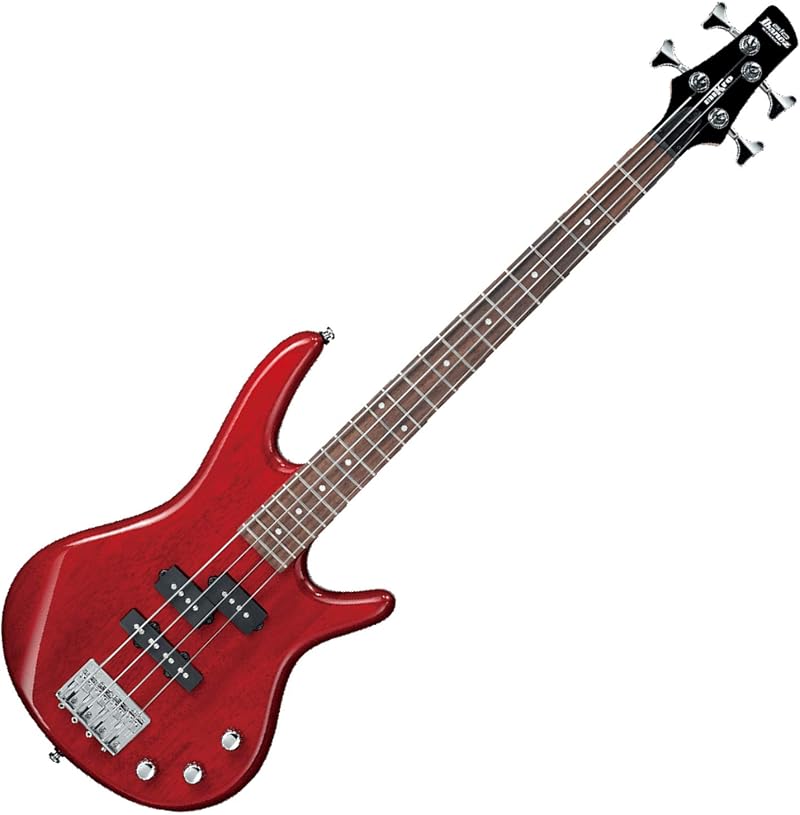
miKro GSRM20
Transparent Red
A real bass at three-quarter size — the answer for small hands and small rooms

As an Amazon Associate we may earn a commission from qualifying purchases made through our links, at no additional cost to you. We do not publish prices, because Amazon prices change constantly and a stale figure helps nobody. Follow the link for the current price and availability.
Score profile
Six editorial axes, overlaid. Where one shape sits outside the other, that is where the instrument gains ground.
- Ibanez miKro GSRM208.2
- Yamaha BB4348.2
Scores are Fretline editorial ratings on a 1-10 scale. They are our own assessment and are not supplied or endorsed by Amazon or by any manufacturer.
Specification by specification
| miKro GSRM20 | BB434 | |
|---|---|---|
| Brand | Ibanez | Yamaha |
| Model | miKro GSRM20 | BB434 |
| Finish | Transparent Red | Black |
| Instrument | Bass | Bass |
| Fretline score | 8.2 / 10 | 8.2 / 10 |
| Value for money | 10 / 10 | 9 / 10 |
| Amazon rating | 4.6 / 5 (1,986) | 4.5 / 5 (36) |
| Price | Under $300 | $500 - $1,000 |
| Type | Short-scale electric bass | Electric bass |
| Body | miKro solidbody | BB solidbody |
| Body wood | Poplar | Alder |
| Neck joint | Bolt-on | Bolt-on, six-bolt miter neck joint |
| Neck wood | Maple (GSRM4) | Maple and mahogany, five-piece |
| Scale length | 28.6" (726 mm) | 34" (863.6 mm) |
| Fingerboard | Bound purpleheart or jatoba, depending on production run, with white dot inlays | Rosewood |
| Radius | — | 10" (250 mm) |
| Frets | 22 | 21 |
| Fret size | Medium | — |
| Nut width | 38 mm | 1.575" (40 mm) |
| Bridge | B10 with 19 mm string spacing | Vintage Plus Light, convertible stringing, steel saddles |
| Tuners | — | Lightweight open-gear |
| Neck pickup | Dynamix P split single-coil (passive) | YGD Custom V5 split single-coil (Alnico V) |
| Bridge pickup | Dynamix J single-coil (passive) | YGD Custom V5 single-coil (Alnico V) |
| Configuration | PJ | PJ |
| Electronics | Passive | Passive |
| Controls | Neck pickup volume, bridge pickup volume, tone | Neck pickup volume, bridge pickup volume, master tone |
| Orientation | Right-handed | Right-handed |
| Skill level | Beginner, Intermediate | Intermediate, Advanced, Professional |
| Styles | Rock, Pop, Punk, Indie, Funk, Blues | Rock, Pop, Funk, Blues, Country, Indie, Metal |
| In the box | — | — |
A marked row is one where the two differ. A highlighted cell is the stronger figure where one can be judged objectively. Empty cells are specifications the manufacturer does not publish — never estimates.
Which one should you buy?
Computed from the specifications and our editorial scores for these two instruments only. It is not a general ranking.
Most versatile
Ibanez miKro GSRM20Highest editorial versatility score, backed by pickup layout and switching.
Most comfortable
Ibanez miKro GSRM20Highest editorial comfort score: neck profile, radius and body ergonomics.
Best for beginners
Ibanez miKro GSRM20Strongest overall score among the instruments we rate as beginner-friendly.
Best for the studio
Yamaha BB434Build and tone scores combined, with credit for tuning-stability hardware that matters when tracking.
Scores are Fretline editorial ratings on a 1-10 scale. They are our own assessment and are not supplied or endorsed by Amazon or by any manufacturer.
Want a third opinion?
The comparator takes as many instruments as you like, not just two, and recomputes the whole table and every conclusion as you add them.
Other comparisons
Affinity Series Precision Bass PJ vs BB434
Squier · Yamaha
miKro GSRM20 vs Affinity Series Precision Bass PJ
Ibanez · Squier
BB234 vs BB434
Yamaha · Yamaha
miKro GSRM20 vs BB234
Ibanez · Yamaha
BB434 vs BB734A
Yamaha · Yamaha
Pro Series Signature Adam Blackstone "Gladys" Concert Bass V vs BB434
Jackson · Yamaha