Buying guide · updated 2026-08-24
The Best Guitars of 2026
Six guitars, from a $200 first instrument to a signature seven-string built for the studio. Every specification here was checked against the manufacturer before it was published.
As an Amazon Associate we may earn a commission from qualifying purchases made through our links, at no additional cost to you.
Our picks
 Best all-rounderSquier
Affinity Series Stratocaster3-Color Sunburst, Laurel fingerboard
The Stratocaster remains the most useful single electric guitar you can own, and the Affinity is the cheapest version that gets the important parts right — the 2-point tremolo above all.
7.5/10 Fretline4.6 (531)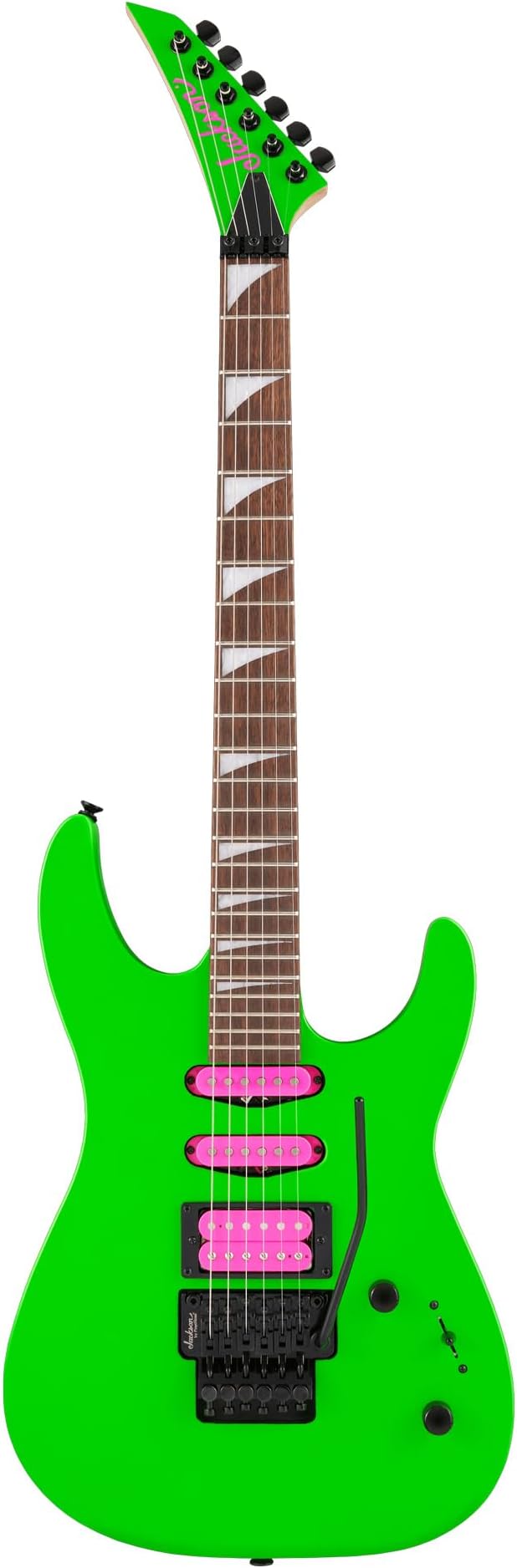 Best for rock and metalJackson
X Series Dinky DK3XR HSSNeon Green
A genuine Floyd Rose licensed double-locking system and a compound-radius board, at a price where rivals are still fitting standard vibratos.
8.3/10 Fretline5.0 (6) Best acousticFender
CD-60SCE Dreadnought, All-MahoganyNatural
A solid mahogany top and a Fishman preamp, with rolled fingerboard edges that normally cost extra at a repair shop.
8.0/10 Fretline4.4 (888) Best semi-hollowEpiphone
Masterbilt Gem Archer SheratonCherry Red, left-handed, with hardshell case
USA-made Gibson mini humbuckers, CTS pots and a hardshell case — and, unusually, available left-handed at the same specification.
8.3/10 Fretline Best extended rangeJackson
Pro Plus Series Signature Misha Mansoor Juggernaut ET7Metallic Black
An EverTune bridge and stainless frets make this the most stable seven-string here by a wide margin.
8.8/10 Fretline Best first guitarIbanez
GIO GRX70QATransparent Black Sunburst
The thinnest neck and the most useful pickup layout available under $300, provided you can live with the hardware.
7.2/10 Fretline4.6 (2,567)
Not sure between them?
Add any of these to the comparator and see every specification aligned, with the differences marked and the score profiles overlaid.
Open the comparatorHow we chose
Every guitar on this page is one we have documented in full: body and neck woods, scale length, fingerboard radius, fret count and size, nut material and width, bridge, tuners, pickups, controls and switching, all taken from the manufacturer's own published specification wherever one exists. Where a manufacturer does not publish a figure, we leave the field empty rather than guess.
The editorial scores are ours. They are judgements about what a specification actually delivers for a player — a compound-radius fingerboard genuinely does make high bends easier, a double-locking tremolo genuinely does hold pitch — and they are not supplied or endorsed by Amazon or by any manufacturer.
What actually matters when you are choosing
Scale length decides how the guitar feels
A 25.5-inch scale, used by Fender, Jackson and Ibanez, puts more tension on the string: brighter, tighter, and slightly harder to bend. A 24.75-inch scale, used by Gibson and Epiphone, is slinkier under the fingers and warmer. Neither is better, but the difference is immediately obvious in the hand, and it is the single specification most worth understanding before you buy.
Fingerboard radius decides how it plays
A rounder board — 9.5 inches on a modern Fender — supports the hand for chords. A flatter board — 12 inches and up — makes bends and fast single-note runs easier and stops notes choking out. A compound radius, like the 12-to-16-inch board on the Jackson X Series, does both: rounder at the nut, flatter at the top of the neck.
The bridge decides how much maintenance you sign up for
A hardtail or fixed bridge is the least trouble. A standard tremolo is a compromise that will drift out of tune with heavy use. A double-locking Floyd Rose holds pitch through anything but makes string changes a twenty-minute job. An EverTune, at the top of the range, holds tuning and intonation almost indefinitely but needs to be understood before it is adjusted.
A note on prices
We do not publish prices. Amazon changes them constantly, and a figure captured last month is worse than no figure at all. Each instrument links straight to its Amazon listing, where the current price and availability are shown. We do group instruments into broad price bands so the filters and guides remain useful.
Common questions
- Is a more expensive guitar easier to learn on?
- Up to a point. The things that make a guitar easy to learn on — a well-cut nut, level frets, low action — are setup work, not price. A $250 guitar that has been set up properly is easier to play than a $900 guitar that has not. Beyond about $400 you are mostly paying for better hardware, better pickups and better wood, none of which help a beginner directly.
- Should a beginner avoid a tremolo?
- A standard tremolo is fine and adds expression. A double-locking Floyd Rose is a different matter: it makes string changes and tuning adjustments considerably more involved, which is a real obstacle when you are still learning. If you are in your first year, a fixed bridge or a standard vibrato is the easier life.
- Do the editorial scores come from Amazon?
- No. The 1-10 scores are Fretline's own assessment. Amazon star ratings are shown separately and clearly labelled as Amazon's, so you can see both the crowd's view and ours.
Instruments in this guide
Squier · Electric guitar
Affinity Series Stratocaster
3-Color Sunburst, Laurel fingerboard
The default first Stratocaster, and it earns the position
Jackson · Electric guitar
X Series Dinky DK3XR HSS
Neon Green
A double-locking Floyd Rose and a compound radius, in the loudest finish Jackson makes
Fender · Acoustic-electric guitar
CD-60SCE Dreadnought, All-Mahogany
Natural
A solid mahogany top and a Fishman system, well under the price that usually buys either
Epiphone · Semi-hollow electric guitar
Masterbilt Gem Archer Sheraton
Cherry Red, left-handed, with hardshell case
USA Gibson mini humbuckers in a semi-hollow — and, unusually, built left-handed
Keep reading
The Best Electric Guitars
The electric guitar is not one instrument but half a dozen, each solving a different problem. Here is what separates them, and which one to buy.
The Best Guitars for Beginners
The specifications that matter to a beginner are not the ones on the front of the box. Here is what to look for, and the four instruments we would recommend.
The Best Guitars Under $500
Under $500 is where the guitar market is most competitive, and where the difference between a good specification and a marketing one matters most.